


(This chapter deals with ancient Greece.
It is not known where the people of ancient Greece came from. As can be seen from the statues that have survived to the present day, they differed from the people of the Orient. While Athens is considered Ionian and Sparta Dorian in origin, their cultures share commonalities. Furthermore, the reverence for “freedom” and the rule of law, along with an individualistic way of thinking, is evident not only in Athens but also in Sparta.
Nevertheless, Greek civilization evolved while surrounded by the civilizations of Egypt and the Orient, and Herodotus writes that many of the names of the gods originated in Egypt.
.
Europeans tend to claim that “Greek civilization was invented by white people who came from the north,” but this is just as absurd as the attitude of some Japanese people who are reluctant to acknowledge that their civilization was transmitted from the Korean Peninsula or the Chinese mainland.
.
Although Athens is considered the birthplace of democracy, its citizens harbored strong imperialist tendencies.
When cities attempted to break away from their alliance with Athens, the Athenians would dispatch their navy, destroy and plunder them, and then sell the inhabitants into slavery.
Furthermore, the wealthy citizens of Athens disdained engaging in crafts and commerce, delegating these tasks to slaves while keeping the profits for themselves.
.
Nevertheless, ancient Greece was the birthplace of individualism and democracy. What strikes one when reading the writings of the ancient Greeks is how prominently the “individual” is present. This is not seen in Egypt or Persia. Sparta had a king, but his authority was incomparable to that of the monarchs of Egypt or Persia.
.
Interestingly Greece also served as the first example to demonstrate that democracy can degenerate into mob rule, populism, and ultimately fascism—a pathology that plagues today’s developed nations as well.
Even so, it remains unclear why Greece, amidst the sea of Oriental civilizations, was able to build a society founded so firmly on the “individual” and reason.)
.
Greece—a Mutant of Mediterranean Civilization
.
When I think of the concept of the “individual,” ancient Greece comes to mind. So, I’ll focus specifically on Greece here.
It’s worth emphasizing that Greece is not a land of abundance. Unlike Egypt or Mesopotamia, it lacks great rivers and fertile plains. Instead, the Greeks made a living by trading the grapes and olives they could cultivate on their rugged, mountainous land. Athens became a powerful city-state, particularly after the discovery of silver mines at Laurion just before the Persian Wars.
,

(Laurion silver mine: the source of Athen’s emergence)
.
Artifacts unearthed in Greece date back to the Early Bronze Age, around 3000 BC, though we don’t know who the people were at that time. This region then experienced two major collapses. The first occurred at the end of the Early Bronze Age, around 2000 BC. While the civilization on Crete survived, a new culture later emerged in Mycenae around 1650 BC. This civilization was again destroyed around 1177 BC, this time by the mysterious “Sea Peoples.” After these two periods of collapse, civilization in the region (Greece) regressed significantly, with the latter period following the Sea Peoples’ invasion often referred to as the “Dark Ages,” a time from which we have no historical records.
.
By the 8th century BC, “city-states” began to reappear in Greece, although city-states had already existed earlier in Egypt, Mesopotamia, and Greece. However, it’s important to consider who founded these Greek city-states in the 8th century BC. European scholars have long theorized that the Dorians, a people of European descent, migrated south and established Greece, conquering the region with iron weapons. Yet, the Ionians, who founded the city of Athens, had already been there before the Dorian arrival. In Thucydides’ History of the Peloponnesian War’, a Spartan general refers to his people as Dorians, distinct from their enemies, the Ionians of Athens.
.
Whether we consider the Ionians or the Dorians, Greek sculptures depict people who resemble northern Europeans more closely than the diverse peoples of the ancient Near East. As I’ll explore further, the ancient Greeks—whether from Ionian Athens or Dorian Sparta—differed from the more authoritarian societies of the Orient, as they tended to reason from an “individual” perspective. It is interesting to note, though, that while the Greeks valued oratory and persuasion, they also took divine prophecies and omens seriously when making decisions. The Oracle of Delphi, where priestesses delivered prophecies, was held in high regard, symbolizing the coexistence of rational thought and ancient religious belief in Greek culture.
Finally, we have to keep in mind that the name “Greece” originates from the Latin “Graecia”. The region used to be named as “Hellas”. The tribes in the region believed they were descendants of the god Hellen, which connected the various tribes, such as the Ionians and Dorians. These tribes likely recognized their shared language and ancestry, a unity that enabled them to resist the Persian invasion in 492 BC.
.
Greece in the Orient civilization
.
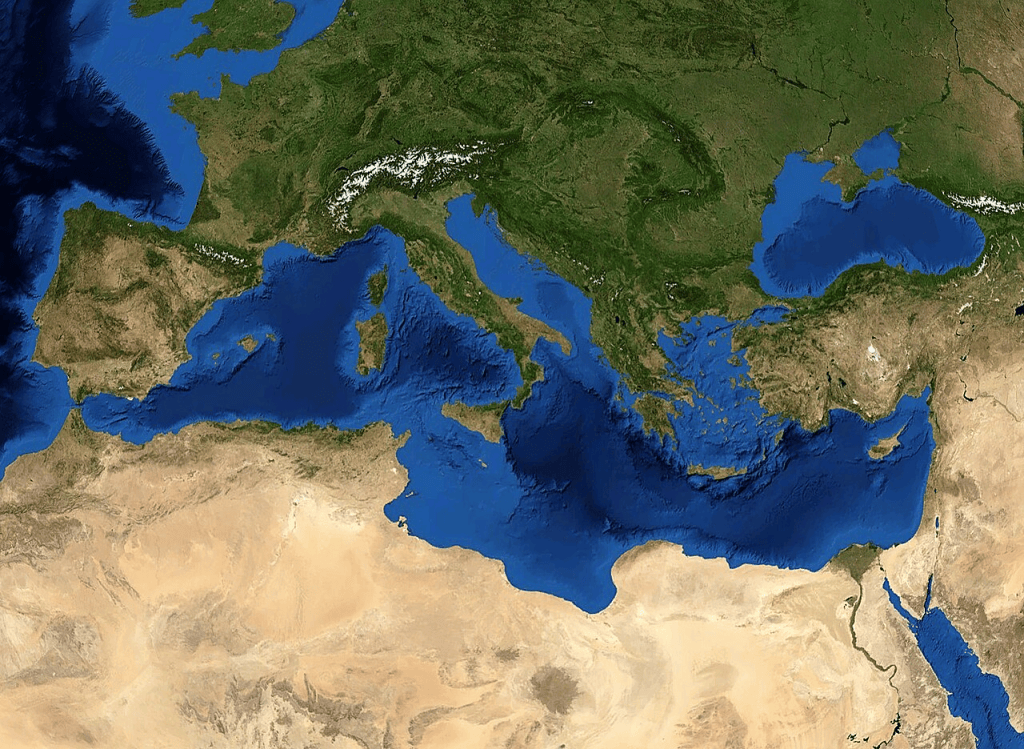
As stated above the period of about 500 years between the destruction of the Mycenaean civilization and the re-emergence of the city-states of Greece is known as the “Dark Ages”, but in reality Greece was a remote part of the Mediterranean and Orient civilizations, and we must recognize that even during the “Dark Ages” there was probably active progress in civilization in the surrounding areas. The exchange between Egypt, Phoenicia and the Greek region continued consistently.
This was pointed out by Martin Bernal, author of “Black Athens” (1987), causing a sensation, but it was actually something that had been pointed out since ancient times. A typical example is the ancient Greek historian Herodotus’ “History”, in which he points out that the hometown of the Greek mythological hero Perseus is the town of Kenmis in Egypt, and he also writes, “Not only Dionysus, but almost all the names of the gods came from Egypt to Greece. This is something I have confirmed through my own research. The exceptions are Poseidon (from Libya), Hera, and Themis…”
.
.
Even though there was communication between Egypt and Greece, in ancient times Egypt had become a part of the Achaemenid Empire of Persia. Even so, many of the cultural artifacts of Egypt originated in Egypt, not Persia, and these came to Greece.
In his “History of the Peloponnesian War”, Thucydides wrote that the system of final tax returns was introduced to Athens by Solon, the ruler of Athens, from Egypt. And in 548 BC, when the Temple of Delphi in Greece was destroyed by fire, King Amasis of Egypt (reigned 570 – 526 BC) donated 1,000 talents of alum, and the Greeks living in Egypt donated 20 mnas. This probably shows that trade was flourishing between the two sides.
.
Persian Wars—Battle between autocracy and democracy
.
The battles between the Achaemenid Empire and ancient Greece, the “Persian Wars” – which took place three times between 499 and 449 BC – were a turning point in history that led to the rise of ancient Athens. In school history lessons, we learned that the far-off, backward autocratic nation of Persia attacked the land of Greece, the birthplace of democracy, but the truth seems to be the opposite. Persia was not “far away” but rather was at the center of the Oriental civilization sphere, while Greece was on the periphery. It seems that the cause of the conflict with Greece was the establishment of the powerful Achaemenid Empire in Persia, which expanded into what is now Turkey and Asia Minor and began to aim for control of the Aegean Sea trade routes.
In any case, a man named Demaratus, who had lost a political dispute in Sparta at the time, had gone into exile in the Persian Empire, and Alexander the Great, who later fought against the Persian Empire, recognized the presence of Greek mercenaries in the Persian army. Persia was always in the sights of the Greeks. It was like China for Japan.
There is an interesting story. It is said that there were lions in Greece at this time. According to Herodotus’s “History”, the camels of the Persian army of Xerxes the Great, which invaded Greece, were attacked by lions around the time they crossed the Dardanelles.
.
The Forgotten Phoenicians
.
When discussing the contributions of Greek civilization, we should also remember the Phoenicians. The Phoenicians were a Semitic people who migrated from regions that are now Turkey or the Red Sea to what is present-day Lebanon. There, they established a major trading center that connected the entire Mediterranean with the Orient. Serving as a crucial link between the Silk Road and the Mediterranean—much like Constantinople would later—they monopolized the silver trade from Tartessos, located in modern-day Spain. They also traded tin, an essential metal for producing bronze. Following the devastation of Mediterranean civilizations by the “Sea Peoples” around 1177 BC, the Phoenicians expanded their reach into the western Mediterranean. It’s believed that they even achieved a circumnavigation of Africa in the 6th century BC, using nautical techniques that allowed them to navigate even against adverse winds.
.
The Phoenicians are also credited with developing a writing system that facilitated widespread trade. Drawing from Egyptian hieroglyphs and Mesopotamian cuneiform, they created an alphabet with just 22 letters, which could be used to write anything—a revolutionary step for its time. In comparison, China, with its many languages, used Chinese characters to enable trade across diverse linguistic regions, while Persia developed a phonetic alphabet similar to the later Latin alphabet.
The Phoenicians may have faded from the historical record after their colony Carthage was destroyed by the Romans, but their legacy endures. Their genetic lineage can still be found in prominent individuals of Lebanese descent around the world. These include Steve Jobs, who built Apple into a major corporation; Carlos Ghosn, who restructured Nissan; Carlos Slim, who commands the Mexican telecommunications industry; and Michel Temer, a former president of Brazil. Even the people of the Catalonia region in Spain are said to have Phoenician ancestry.
.
Some scholars suggest that the Greeks adapted the Phoenician alphabet to create the Greek alphabet, using it to write Homer’s epic poems, such as the Iliad and the Odyssey. This may have played a role in shaping Greek identity. In other words, Phoenician civilization, alongside Egypt—both integral parts of the “Orient”—were foundational to ancient Greek civilization.
Many Europeans hold on to the belief that “Greek civilization was created by white people from the north,” but this is as misguided as those in Japan who deny that their civilization was influenced by the Korean Peninsula.
.
Is It Really True That “Sparta = Tyranny” ,and “Athens = Democracy”?
.
When the Persian Wars began, it appears that Sparta held leadership among the Greek city-states. The Ionians and Aeolians of Asia Minor (now Turkey) sent envoys to Sparta, seeking help against the Persian threat.
Sparta’s economy was based on agriculture, and the city-state was known for its rigorous “Spartan education” system. However, contrary to the popular image of a strict autocracy, Sparta was more like a community of independent warriors under a capable leader, somewhat like the Viking societies that emerged later.
.
Sparta’s political system was structured and complex. Decision-making began with the five Ephors (chief ministers), who would draft proposals. These were then submitted to the Gerousia (Council of Elders), the highest decision-making body, consisting of two kings and 28 elders. Once the Council approved a proposal, it was put before the Assembly of the People, where citizens gathered to cast their votes.
While the kingship was hereditary, the kings were subject to audits by the Ephors and bound by the law. Sparta was a society governed by law, as documented by the historian Herodotus in his ‘Histories’, where he describes the events of the Persian Wars.
In one account, Demaratus, a Spartan who went into exile in Persia after losing a political struggle, describes Sparta to Xerxes, the Persian king preparing to invade Greece. Xerxes asks, “What kind of country is Sparta?” Demaratus responds:
“The Spartans are formidable even as individuals, but when united, they become the strongest army in the world. This is because, although they are free, they are not free in every respect. They have a master called nomos (law), and they fear this more than your retainers fear you.”
.
Demaratus portrays Sparta as a country bound to the rule of law, referring to the word “freedom” as well. But another Spartan makes an even bolder statement to a Persian general advising surrender:
“You know what it is to be a slave, but you have not yet tasted what it is to be free. Once you experience the taste of freedom, you would urge us to fight for it, not only with spears but with hatchets as well.”
When the Spartan messenger above meets with Xerxes, he refuses to bow down in worship, as was customary. Xerxes, though generous in sparing the messenger, also makes a pointed statement, suggesting that if the Greeks understood the might of Persia, they would give up their “freedom” without the Persians having to invade. If we imagined this sentiment today, it could sound like something Chinese President Xi Jinping might say: “If the Taiwan realizes our military strength, they would abandon their so-called ‘freedom’ without us needing to make an expedition.”
.
During the Persian Wars, Athens was already viewed as a large power among the Greek city-states and excelled more in naval than in land warfare. The historian Thucydides notes that Athenian residents (limited to those with citizenship) sold their property and manned the warships, fully committing to the defense.
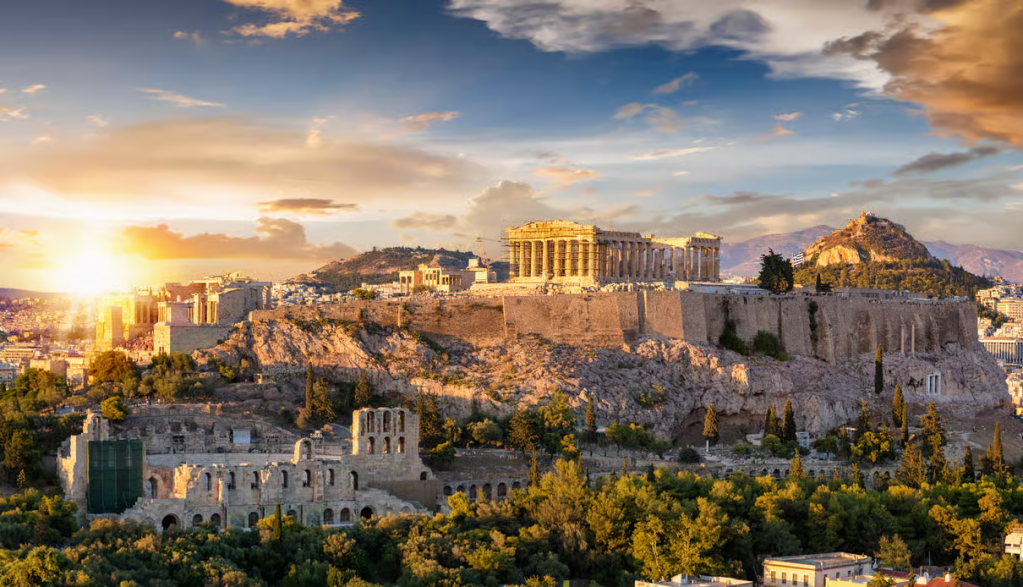
The decisive victory over the Persians came at sea, with the Athenian navy playing a central role. Following the war, Athens’s power grew. It established the Delian League, purportedly to counter the Persian threat, and collected “alliance fees” from other city-states. Athens then used these fees for its own projects, such as building the Parthenon, and the Delian League effectively became the Athenian Empire. The “alliance fees” functioned more like taxes imposed on subordinate states.
When certain cities tried to leave the League, Athens responded with military force, sometimes looting and enslaving the residents. In 469 BC, for instance, the island of Naxos suffered this fate at Athens’s hands. This act of aggression parallels the Soviet invasion of Czechoslovakia in 1968, which aimed to stifle liberalization.
.
Fast forward to 2002, when the Bush administration in the United States deployed troops to Iraq, a country which had fundamentally opposed to the United States in many ways. This action was taken under the pretense of “democratizing the Middle East and stabilizing the region.” The reasoning went, “If we democratize them, they will stop fighting.”
However, history challenges the notion “democracies don’t engage in war”. The United States, purportedly the most democratic entity in the world, has frequently been involved in conflicts since World War II. Going further back, ancient Athens, as we saw above, was a “democracy” that was also highly belligerent. Athens not only expanded its overseas colonies but also harshly repressed its allies when they defied it.
.
While it’s true that ordinary people usually don’t like being sent off to war, Athens incentivized its lower-income citizens by allowing them to serve as rowers on its warships, granting them political rights in exchange. Athenians, moreover, avoided handicrafts and commerce, relegating such work to slaves while keeping the profits for themselves. Rather than promoting peace, Athenian “democracy” took on a predatory character, reminiscent of the colonial spirit seen in Western countries in the early modern era.
.This aggressive approach led other Greek city-states, fearing Athens’s power, to rally under Sparta’s leadership, sparking the Peloponnesian War (431 BC – 404 BC), which split Greek region into two. This conflict was somewhat analogous to the Cold War between the United States and the Soviet Union, in which the two powers divided the world after defeating their common enemy, Nazi Germany. The Peloponnesian War became a struggle between the Delian League, dominated by Athens, and the Peloponnesian League, centered around Sparta.
.
.
.
He describes how the Delian League, initially a noble alliance against Persia, gradually degenerated to serve Athens’s interests:
“At first, there was a great cause: to fight against Persia. But soon, Athens’s own vanity and greed took over, until it bought the hatred of the majority. This led to repeated rebellions and crackdowns within the alliance. Once trusted friends, you have now become nothing more than a source of suspicion and discord. If you ease the pressure on allied states, your own safety will be jeopardized.”
Once a state becomes the leader of an alliance, it cannot simply step down at will. Thucydides reasons further, “Should the leader be forced from power, it risks facing the resentment it incurred during its time in control. Therefore, understand that you will no longer be able to abandon your leadership role. It is too late now to try and be a mild-mannered figure.”
.
Regarding those who dream of non-alignment and neutrality, he offers a harsh perspective:
“Those who hope for peace will always need the protection of the strong to survive. Such people can live safely as slaves in a slave state. But they bring no benefit to the leading city-states that hold power over the weak.”
For nations aligned with a hegemon, they desire a leader who is as fair and generous as possible. This sentiment is expressed by Thucydides as follows:
.
“When a prize that can be seized by force appears, it’s unrealistic to expect someone to refrain from taking it based solely on notions of right and wrong. But a person who can control his power to govern others with morality is truly worthy of praise.”
The United States after World War II somewhat embodied this ideal, but it seems there is little room left for such an approach now.
.
The Prominence of the Individual
.
When reading ancient Greek writings, one gets the sense that the individual held a prominent place. To put it another way, while the Persians and Egyptians relied on commands to move people, the Greeks used reason—or, more precisely, logic. The former approach reflects a hierarchical relationship between people, whereas the latter reflects a relationship between equals.
Even in Sparta, tyranny was absent, and in Athens, as demonstrated in the many speeches in Thucydides’ History of the Peloponnesian War’, it seems that all members of the army thought independently, and acted only after they had personally committed to the rightness of their actions.
Of course, not all residents of Athens had these rights, and even those who did sometimes showed flaws in behavior, as in the case of condemning the philosopher Socrates to death. Even so, their way of life contrasted sharply with the despotism found in the East.
.
Aristotle’s Politics’ analyzes politics through categories that remain relevant today, from monarchy to democracy, making the work a foundational text in political science courses in American universities. In Aristotle’s writings, the individual is foundational, which creates a strong affinity with modern Western scholarship. Indeed, Western intellectuals of the Renaissance rediscovered Greek classical texts and used them as a foundation for developing modern philosophy and science.
.
On the other hand, “Introduction to History” by Ibn Khaldun (1332-1406 AD), a renowned historian from the East, also provides profound insights. However, the cases he addresses are largely limited to the Eastern monarchic and despotic systems, making his work less applicable to the present day.
.
Why is there such a contrast within the same Mediterranean civilization sphere? Records indicate that the Persian rulers knew of democracy and deliberately chose dictatorship. One telling example comes from Herodotus’ “Histories”.
Darius I, who restored the Achaemenid Persian Empire, discusses with his peers the form of government to adopt before his coronation. Otanes warns against dictatorship, advocating instead for “entrusting the affairs of state to the entire Persian people” (democracy). Megabazus, however, argues in favor of an oligarchy, pointing out that democracy can easily fall to populism and saying, “Nothing is more foolish or insolent than the masses, who are good for nothing.” Darius I, on the other hand, claims, “Of the three systems—democracy, oligarchy, and dictatorship—dictatorship is by far the best. … Who gave us our freedom in the first place?” Thus, he adopts a dictatorship—though the veracity of this account remains uncertain.
.
So, living in the same Mediterranean environment, societies centered on individualism and those with solely a king did coexist. Given the shared environment, might the difference lie in ethnic characteristics? Must we accept the opinion of some European scholars that “the ancient Greeks were white people from the north and thus had a strong sense of individualism”?
Certainly, the “white people from the north”—those who migrated to present-day Iran and India around 1200 BC—called themselves aryas (aristocrats, warriors) and took pride in their freedom.
.
However, their society differed from modern Western individualism; in their sacred texts, such as the Rig Veda and the Avesta, the family formed the core of life rather than the individual, with the patriarch wielding considerable power. This structure, where only self-aware warriors had rights, was more authoritarian than later Germanic (also “Northern White”) societies.
That said, we cannot claim that the Semitic and Hamitic peoples, who shaped Eastern civilizations, were inherently authoritarian, or that Indo-European “white” peoples inherently prioritized the individual. The question remains: why did Greece, surrounded by Eastern civilizations, create a society based on individualism and reason?
.
Democracy in Athens, Compromised by Populism
.
Ancient Greece was the birthplace of individualism and democracy. Interestingly, however, it also provided the first example of how democracy can devolve into mob rule, populism, and even fascism—a pathology that many developed countries face today.
In ancient Athens, people with shared interests formed factions and frequently engaged in political disputes with opposing groups. These factions often tried to expand their support by distributing money and positions. Early Athens had no formal bureaucracy, and public office was typically filled by senior citizens volunteering their time. Later, however, nearly all public offices (except some senior roles, such as generals) were opened to all citizens, regardless of their background or qualifications. Public posts were awarded by lottery rather than by election, and the lure of bribes and other benefits made these positions attractive.
.
Plato and Socrates, advocates of governance by the wise, criticized this system. Yet Socrates was ultimately sentenced to death by a court selected by lottery.
.
In this way, ancient Athens experienced virtually every type of government still relevant today: beginning with monarchy, moving through aristocracy, and finally shifting between military oligarchy and mass democracy. This journey makes Aristotle’s ‘Politics’ essential reading for modern political science.
.
Incidentally, it is estimated that at the height of its power, ancient Athens had 30,000 “citizens” with rights and 60,000 slaves; thus, people without rights—including the families of “citizens”—constituted the overwhelming majority of the population. (this sentence was added on Sep. 19)
Leave a Reply