


The Mediterranean Civilizational Sphere: An Extension of the Orient
(The source text of this series is “In Search of Lost Modernity” by Akio KAWATO.
The English edition of this book (originally written in Japanese) is on
https://docs.google.com/document/d/1hiRK7kjbX0Hxd2NOxPqtQlVWgjDHgKCr/edit
https://docs.google.com/document/d/1MB0Me9P5Lpa2HGceuJUdMqqQ2CRHQSxa/edit
The copyright belongs to the author, Akio Kawato
.
(This installment serves as an introduction to the upcoming section on ancient Greek civilization. The author draws the reader’s attention to the fact that ancient Greece was situated on the periphery of the civilizations of the Orient (Mesopotamia, Egypt, etc.) and incorporated various elements from the Orient. This can be collectively referred to as “Mediterranean civilization.”)
.
The Mediterranean Civilizational Sphere: An Extension of the Orient
.
Thus, Mesopotamia serves as the “epicenter” of culture and civilization in this vast region. Trade and communication flourished among the Indus, Margiana, and Egyptian civilizations, and for a period in the 7th century BC, Egypt and Mesopotamia were united under Assyrian rule. These regions can collectively be called the Orient.
.
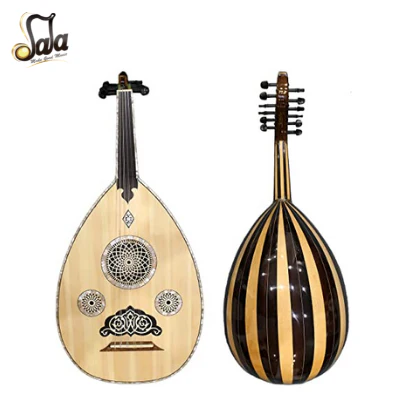
The societies and cultures of the Orient shared many similarities. Crafts, music, and musical instruments were nearly identical, and social relationships tended to emphasize a strong patriarchal system over individualism.
.(from above: Arabic, Chinese and European “lute”)


.
In Mesopotamia, the economy was initially supported by highly productive agriculture and later by the transportation industry, which played a crucial role in the Silk Road’s central section. Mesopotamia, a fertile plain between the Tigris and Euphrates rivers, saw record crop yields; a Sumerian city record from 2350 BC shows that wheat yields were 80 times the amount sown. In medieval Europe, by comparison, the yield was only five to six times the seed planted.
However, irrigation led to salinization, as evaporating water drew salts up from the soil, eventually reducing agricultural productivity. This may have driven many to shift toward trade along the Silk Road. Similar conditions of salinized fields can still be seen in Central Asia today.
.
Today, the term “Orient” often refers to the “Islamic world.” However, Islam did not emerge independently of the ancient Oriental civilizations that preceded it. Established in the 7th century AD, Islam can be seen as a synthesis of customs and traditions that had developed in the Orient over millennia. While Islam replaced ancient polytheistic beliefs with monotheism, it preserved much of the cultural heritage of Mesopotamia.
.
Oriental culture also left a significant legacy in later Greek and Roman civilization. The most evident example is the pantheon of gods in Greek and Roman mythology, many of whom seem to have originated from Oriental deities. As we will explore further, the ancient Greek historian Herodotus acknowledged these influences in his own research.
Leave a Reply